
Bloomington Previous Resident Eras
No record covers every person or year. Choose the source nearest the date, then confirm the name elsewhere. Ownership comes from recorded instruments. Occupancy is more often shown by a directory, census, or newspaper.
| Source | Years | Where Held | Evidence |
|---|---|---|---|
| Recorder index | Office index to 1837; online varies | Recorder/eSearch/RECORDhub | Names, deeds, legal descriptions |
| City directories | 1855-present; digital 1855-1920 | Library and Museum | Dated name/address snapshots |
| Cole criss-cross | 1982-1996/97 | Library | Address-oriented clues |
| Federal census | 1820-1930 holdings; 1890 missing | Library/databases | Households at enumeration |
| Sanborn maps | 1886 into 1961/63 | Museum/LOC | Building footprint, not occupant |
| Newspapers | Titles from 1847 | Library/Museum | Moves, deaths, kin |
A blank result marks only that source's limit. It does not prove no prior resident existed.
Start With Bloomington Property
Enter the house number and street in the McLean Property Tax Inquiry. Save the PIN, owner-name lead, parcel class, sales, and legal description. The portal warns that its data is not proof of title. McGIS adds parcel shape, acreage, PIN, source, and change metadata, but no owner or street-address field. Use the map to confirm land, then carry the PIN to the Recorder. A polygon and tax mailing name do not prove occupancy.
Record the situs address, which means the physical site, apart from the mailing address. Trusts and estates make that distinction especially useful.
Trace Bloomington Deeds Backward
A deed may use a lot and block instead of a house number. The Museum house method starts with an abstract of title, then uses the Recorder index, plats, directories, and maps.
- Copy the current PIN and legal description.
- Find the owner's acquisition deed and note date, parties, and land.
- Search the seller as an earlier grantee.
- Repeat while matching the same tract.
- When the web ends, use the counter and book index.
A grantor gives an interest; a grantee receives it. Their linked transfers form a chain of title. Inspect images because older names and PINs may be incomplete.
Bloomington Recorder Portal Change
McLean announced a move from eSearch to RECORDhub after August 2026's last weekend. Historical books were still loading. Data since 2005 is described as largely complete, while older entries may have gaps. A recovery project added more than 100,000 records from roughly 1971-2003, often tagged RDX.
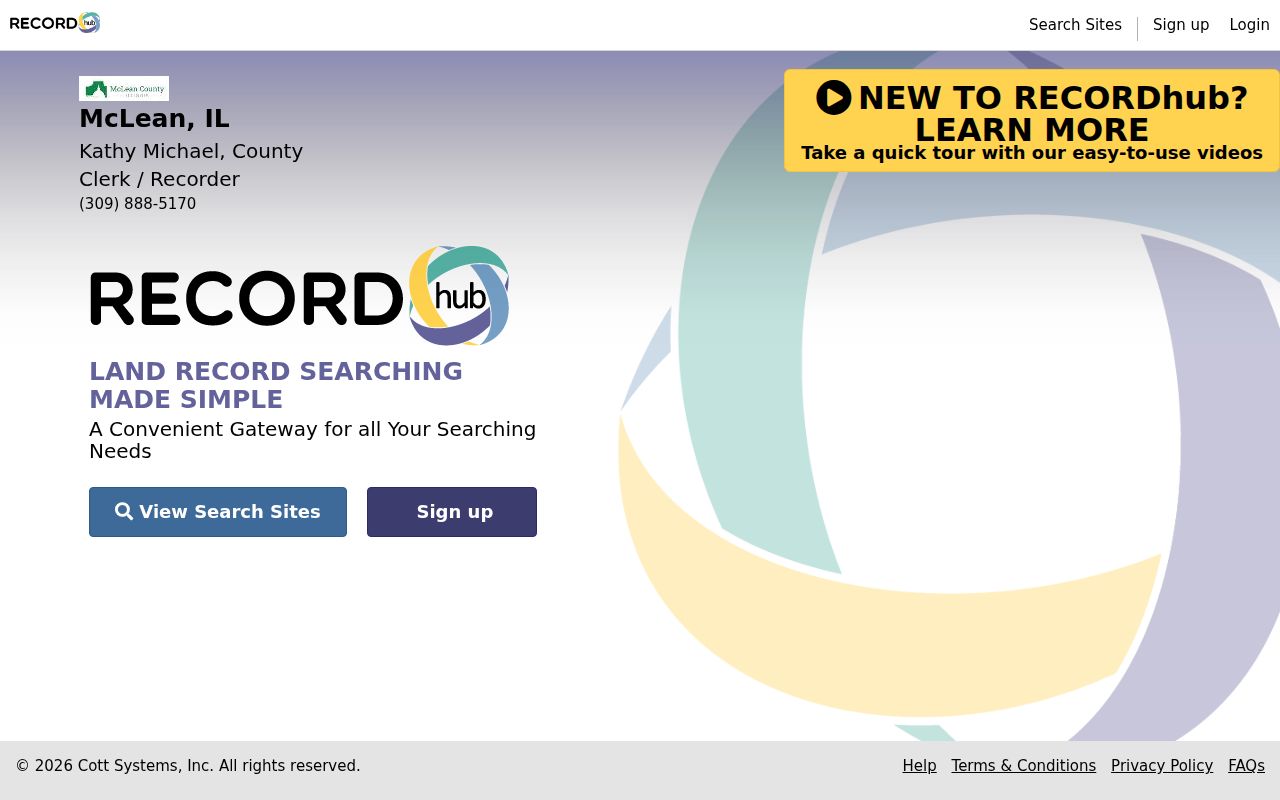
The capture marks a changing access point, not proof that all old books are online.
Map Old Bloomington Addresses
Main Street divides east and west numbering; Front Street divides north and south. Direction prefixes matter, and numbers generally rise by 100 per block. Old streets may be renamed or renumbered. Preserve each printed form.
Plat books translate legal land wording into lots. Sanborn maps date footprints and use, not residents. Follow legal description to plat, plat to block, map to directory. That chain survives address change better than a street search alone.
The Museum identifies useful Sanborn editions from 1886, 1896, 1950, and later updates. A sheet may show a structure's outline, construction details, additions, or former use. Compare the correct sheet with a dated directory rather than attaching a resident name to the map itself. A bird's-eye view or the 1895 plat book can add context, yet neither substitutes for a deed or household entry. Write down the map edition and sheet number so another researcher can reproduce the step.
Pair Bloomington Directories and Census
The library holds an almost complete directory run from 1855 to today, with early gaps. Digital volumes cover 1855-1920. Cole books reverse the order by address for 1982-1996/97. A census records a household on its enumeration date.
- Choose the closest directory and inspect name and street sections.
- Copy address, prefix, spouse note, job, and abbreviation.
- Find the nearest census enumeration district, an area assigned to one census taker.
- Compare names, ages, kin, jobs, birthplace, and neighbors.
- Check the next directory for a move.
Use newspapers and cemetery files to bridge the missing 1890 census.
A directory is a dated claim, not a complete census. A person can be absent because the canvass missed the household, the listing used a different spelling, or the family moved between editions. Search a surname variant and the address index, then inspect adults listed at the same address. When the next volume changes the household, test the move against a deed, obituary, newspaper notice, or later census. This method keeps a gap from turning into an unsupported story.
Bloomington House Research Method
The Museum older-house guide joins deeds, abstracts, plats, Sanborn maps, tax rolls, directories, newspapers, and photos. It keeps land, building, owner, and occupant as distinct trails.
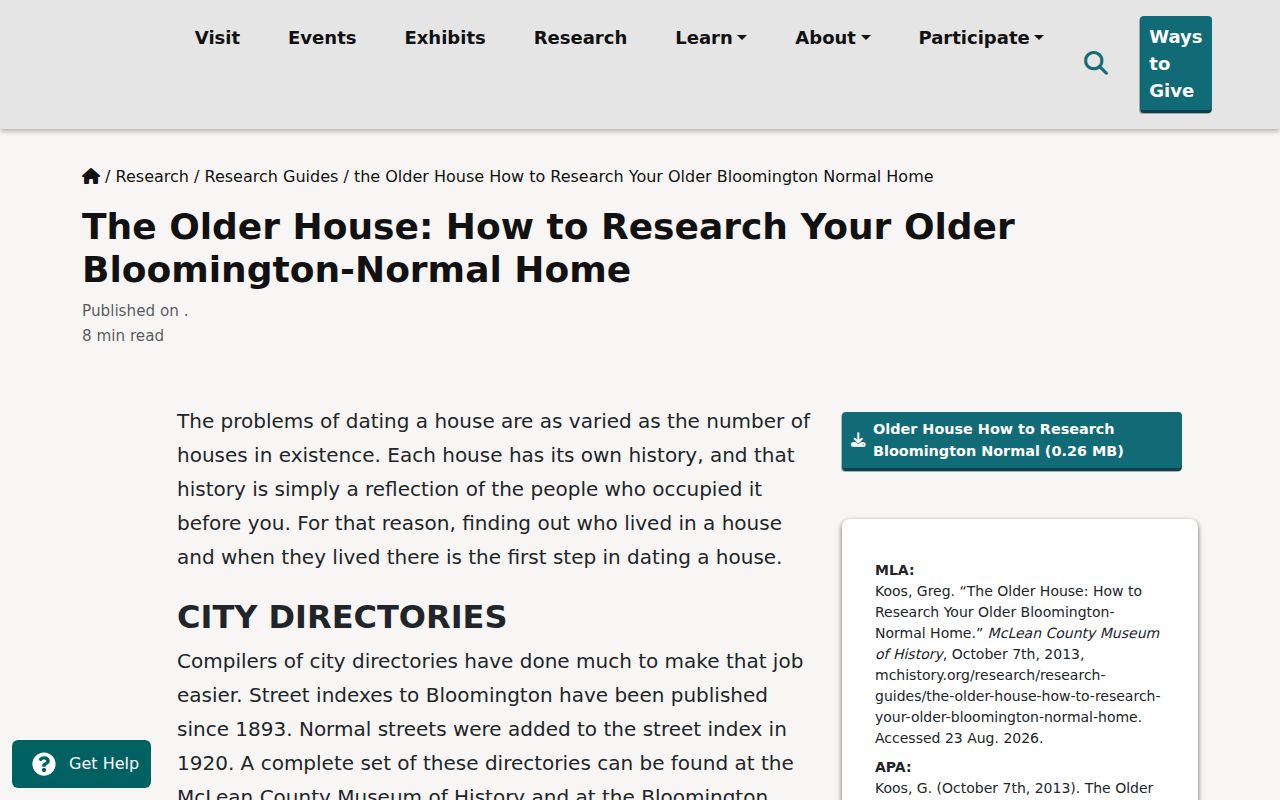
The guide bridges a modern parcel to old land wording, maps, and directory addresses.
Bloomington Previous Resident Terms
Label evidence so a deed owner is not mistaken for an occupant.
- Grantor/grantee
- Giver and receiver of a land interest.
- Chain of title
- Linked transfers for one tract.
- Criss-cross directory
- A directory arranged by address or phone.
- Enumeration district
- One census taker's assigned area.
- Abstract of title
- A summary of papers affecting land.
Lawful use. Research Bloomington previous residents for family, estate, property, or community history. Never track, threaten, harass, or harm a living person.
Close Bloomington Household Gaps
Newspapers, probate, and cemetery files can explain why a name vanishes. Evergreen may show burial date, section, lot, residence, birthplace, marker, obituary, and notes. Confirm a match with relatives, age, address, probate, deed, or another directory. A cemetery residence does not prove occupancy at the house.
IRAD lists McLean probate indexes for 1834-1934 and wills for 1838-1940. Later files follow Circuit Clerk rules. Estate deeds may name heirs but not show where each lived.
The Bloomington Public Library keeps local newspapers on microfilm, including titles that begin in the 1840s and 1850s. Search the date near a disappearance from the directory, then widen the range. Death notices can name an address, relatives, a church, or a cemetery. Probate can explain a later transfer, while an obituary may explain why a spouse becomes the next directory householder. Keep those as separate facts until the address, kin, and date align.
Bloomington Records After Fire
A June 19, 1900 county fire caused loss or damage. Missing paper is not proof no event occurred. Search later copies, deeds, churches, directories, newspapers, cemeteries, and IRAD. Compare sources created before and after the fire, and cite the surviving copy rather than guessing what a damaged volume contained. A later deed can repeat an earlier legal description, while a directory or newspaper can independently place a household in the same period.
National Archives Chicago genealogy resources add census, naturalization, and military records.
See the federal genealogy route.
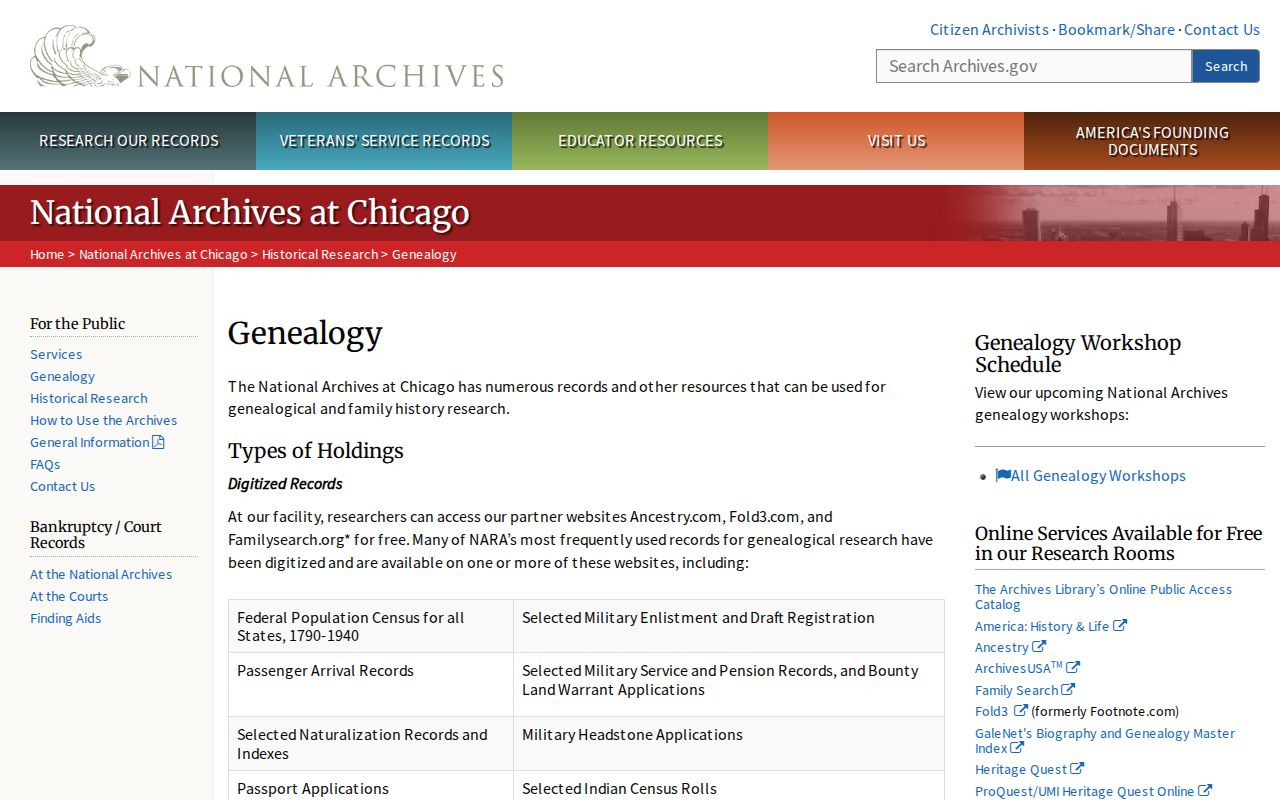
The archive is a fallback when local land and directory chains fail.
Label Bloomington History Findings
“Recorded owner” means a deed supports ownership. “Directory listing” means a publisher placed a name there in a stated year. “Census household” means an enumerator recorded it on the census date. “Possible previous resident” still needs support.
Keep URL or call number, year, page, date searched, spelling, and negative results. “No online result found” is accurate. “No record exists” often goes beyond the evidence.
Build a source log with one row per claim. Record the exact Bloomington address as printed, the modern standardized address, the legal description when known, and the source's own date. Note whether the item is an index entry, an image, a transcription, or a certified copy. If an online portal blocks a guest search or omits an old book, record the access limit and the office counter route. This makes later correction possible when eSearch, RECORDhub, or a library platform changes.