
Finding Bloomington Residents
A Bloomington residents directory search works best when the first source matches the fact already known. An address belongs first in the McLean County Property Tax Inquiry. A name tied to land belongs in the Recorder's grantor and grantee index, where a grantor gives an interest and a grantee receives it. A court matter belongs with the Circuit Clerk. Older names and homes belong in the library's dated directories. Each result has a narrow meaning. A tax result identifies the person billed as owner, not every person inside the home.
Use two records when identity matters. A common name can describe several people, and a mailing address can differ from the property's street address. Dates, middle initials, parcel numbers, relatives, and document numbers help separate them. Current occupants who do not own property or register to vote may leave no open address-keyed trail. That gap is normal, not proof that someone does or does not live in Bloomington.
- Search the county tax portal by owner, house number, street, city, or parcel number.
- Confirm voter status through the Illinois registration lookup and the correct Bloomington election authority.
- Use the Recorder index to connect a name with deeds, mortgages, liens, or plats.
- For an earlier household, check a dated city directory and then a newspaper, plat, or cemetery source.
- Ask the correct custodian for an existing record when it is not posted online.
Bloomington Resident Records Offices
Most Bloomington resident records are held by McLean County offices near the county seat, but city records and city elections follow separate routes. The Recorder keeps land instruments. The Supervisor of Assessments supports assessment work and links the county property tools. The County Clerk keeps vital and marriage records and runs elections outside the City of Bloomington, while the Bloomington Election Commission serves voters inside the city. Address-level methods appear in the Bloomington street directory.
McLean County Recorder
115 E Washington Street, Room M104
Bloomington, IL 61702
309-888-5170
McLean County Assessments
115 E Washington Street, Room 101
Bloomington, IL 61701
309-888-5130
McLean County Clerk
115 E Washington Street, Room 102
Bloomington, IL 61702
309-888-5190
Bloomington Property Search Fields
The live McLean Property Tax Inquiry offers a detailed way into the Bloomington residents directory. None of its visible fields was marked as required during inspection. Search by a narrow fact first, then add another field only if the results are broad. The portal says its data is informational and is not proof of title. For legal ownership, move from the tax lead to the Recorder.
| Search field | Input | Best use |
|---|---|---|
| Owner Name | Text | Find parcels billed to a person or entity |
| House Number Low/High | Number range | Scan part of a block |
| Street Name and City | Text | Locate one address or street |
| Parcel Number | Text | Return to a known parcel |
| Sale price/date | Range | Narrow transfers |
| Class or legal description | Menu/text | Filter property type or land wording |
The property-class menu is unusually broad. It reaches farmland, railroads, mineral rights, and leasehold codes as well as common residential and commercial classes. That variety is useful, but the tax label still does not identify all residents. The portal update observed on August 21, 2026 should be treated as a source date, not a promise that every field stays the same.
View the McLean County property inquiry used for Bloomington searches.
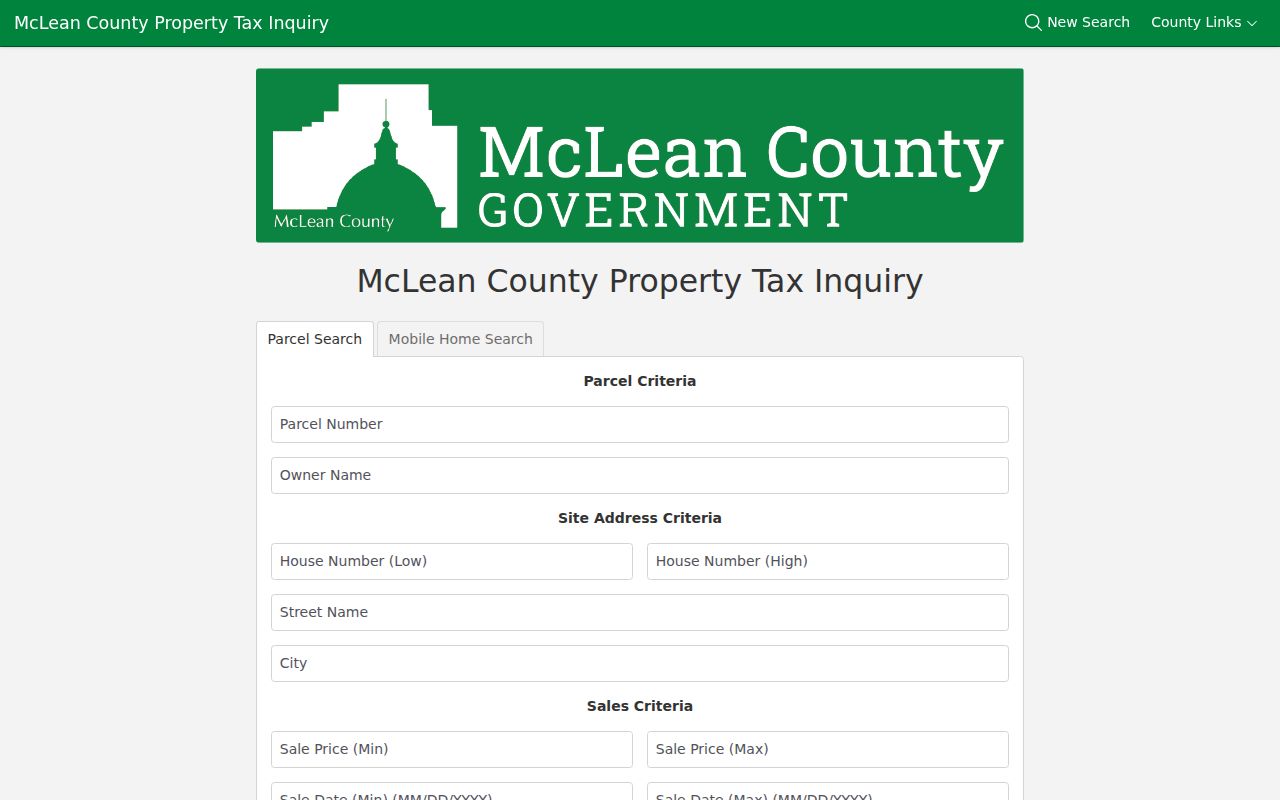
The captured form shows how address, owner, sale, tax, and legal-description filters can be combined before checking the official parcel record.
Bloomington Deed Records Move
The McLean County Recorder announced a move from eSearch to RECORDhub after the last weekend of August 2026. Existing eSearch users must create access in the new system. Historical book indexes and images were still being loaded when the notice was reviewed. That timing matters: a blank portal result during the change may reflect access or migration, not the lack of a deed.
Older searching may also require variants. The Recorder says data since 2005 is largely accurate and complete, while older entries can have missing papers, spelling issues, and parcel-number problems. A 2006 project recovered more than 100,000 records from about 1971 through 2003, often tagged “RDX,” with less complete indexing. The in-person grantor/grantee index is reported back to 1837. Search the name in more than one form and inspect the image.
See the Recorder eSearch transition notice.
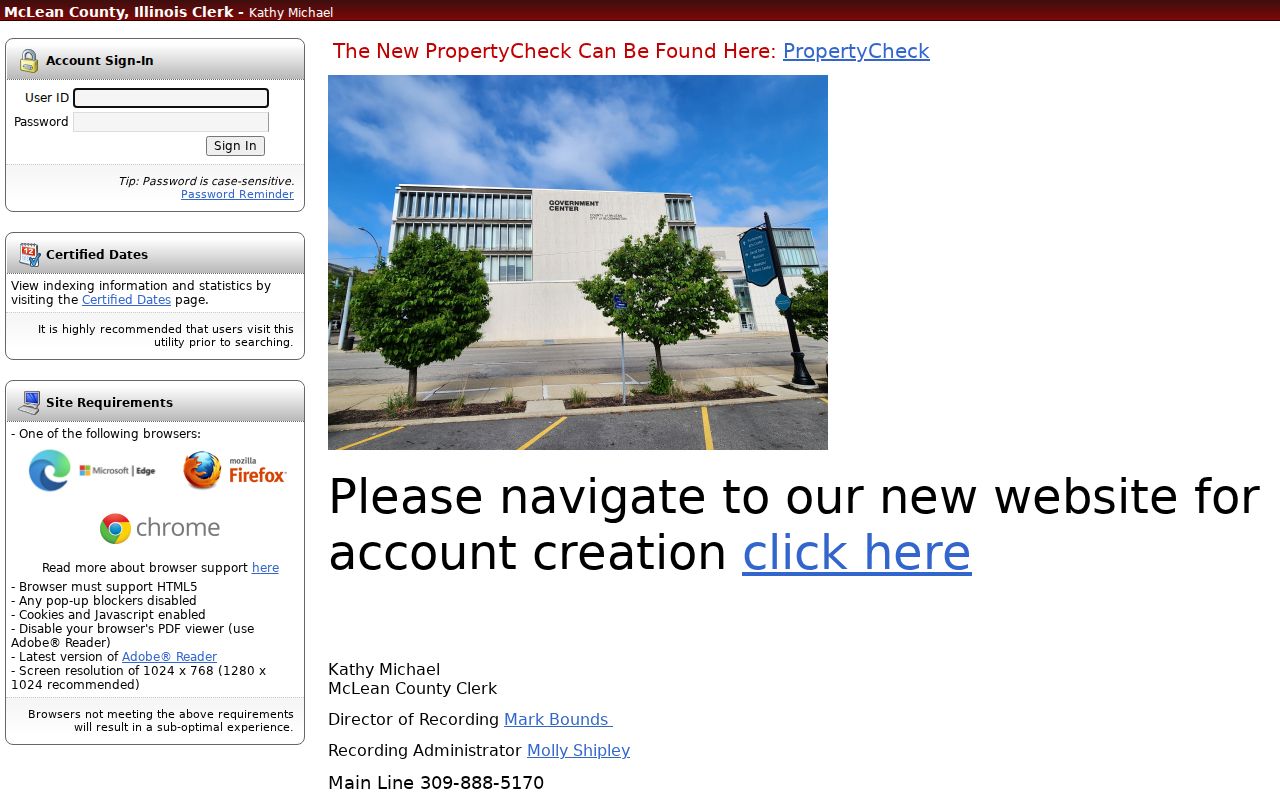
The screenshot preserves the transition point, which should be checked again before relying on either portal.
Two Bloomington Voter Authorities
Election geography creates a local split. The Bloomington Election Commission serves voters within the City of Bloomington. McLean County Elections serves county voters outside the city. Recent county notices stated the distinction more than once, including the February 2026 registration and voting cycle. A Bloomington mailing address alone does not select the office.
The state voter lookup asks for a first name, last name, ZIP code, house number, and street name or range. Registration information is controlled by 10 ILCS 5/1A-16, which limits public fields and use. Search results should confirm registration status or direct the voter to an authority, not be treated as a household list.
Open the Bloomington Election Commission source.
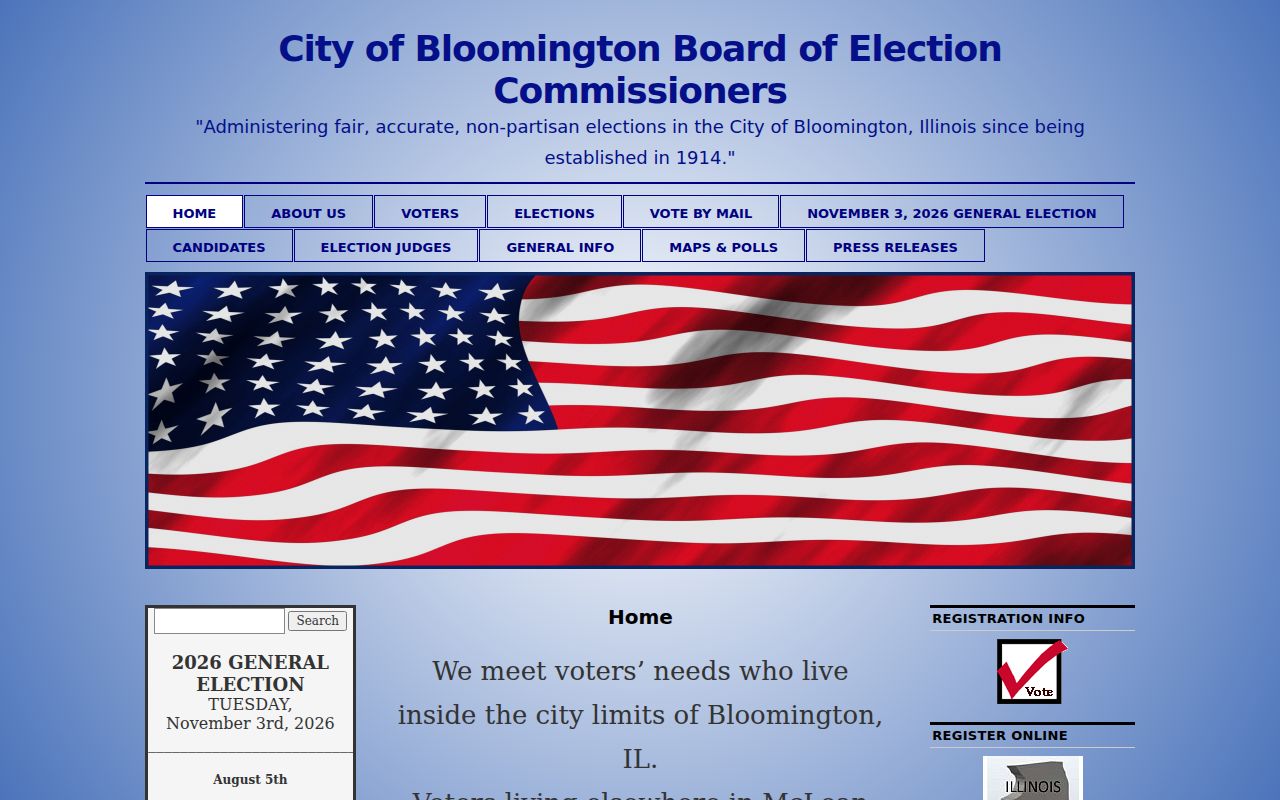
The commission capture helps distinguish the city route from the county election page.
Compare the McLean County elections route.
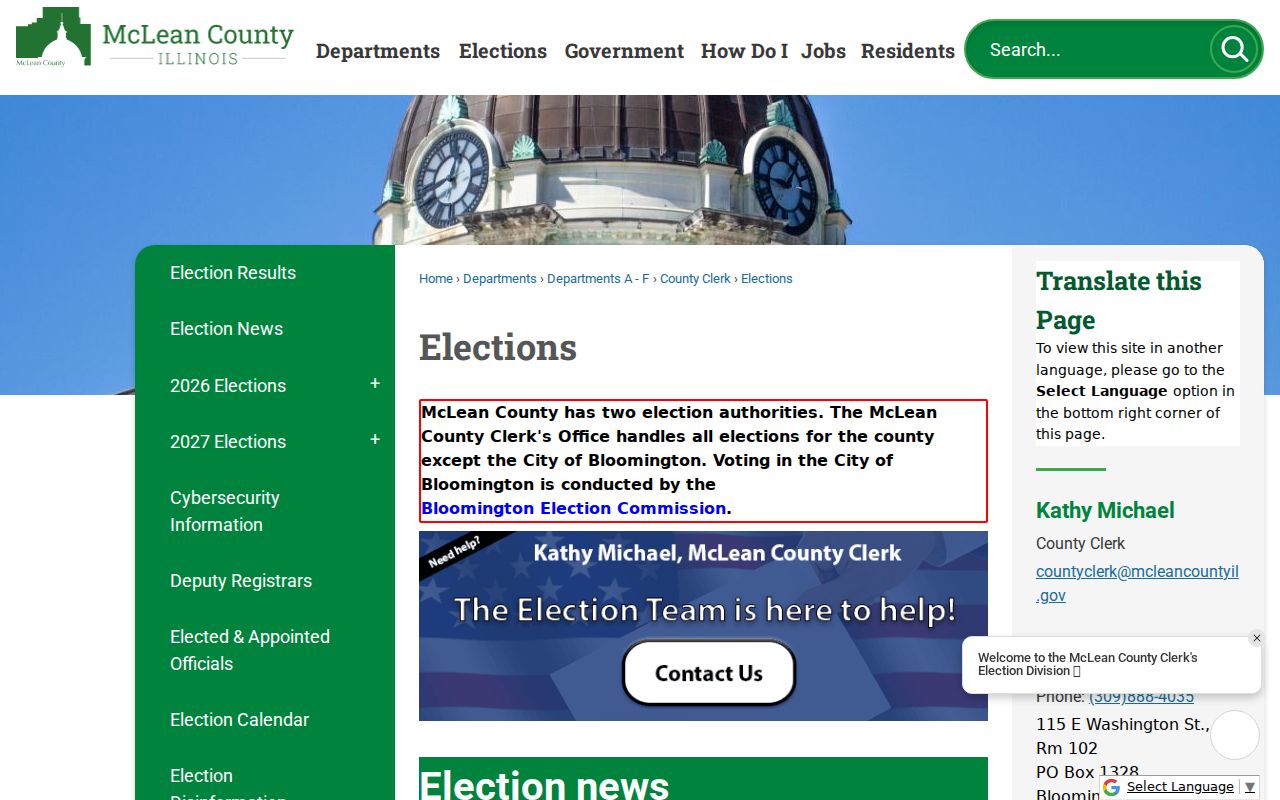
The county source is the counterpart for voters beyond the city election authority.
Current Bloomington Resident Directories
Present-day official rolls answer separate questions. The Bloomington residents directory is a cross-check, not a master list. Property data names a billed owner. A recorded instrument names parties to a transaction. The voter system confirms registration under statutory limits. City staff pages publish public work contacts, while permits may name an owner or contractor for a dated project. None identifies every person at an address.
| Source | Who It Lists | Keeper | Access |
|---|---|---|---|
| Property Tax Inquiry | Tax-billed owners | McLean County | Free portal |
| Illinois voter lookup | Registration confirmation | Election authorities | Limited by Illinois law |
| Recorder index | Parties to land records | County Recorder | Portal and counter |
| Executive staff directory | Public officials | City of Bloomington | Free official page |
| Permit listings | Dated project parties | Building Safety | Recent online; older by FOIA |
Commercial people-finder products merge data from many dates and may hide their sources. Official records are narrower but show the responsible office, record type, and confirmation route. For one name, the Bloomington resident lookup explains how to compare dates, places, and source limits.
Bloomington Court Record Limits
McLean County publishes criminal and traffic searches for 1991 forward and an open civil search for 2008 forward. Remote results are informational, may lag the clerk's file, and exclude confidential or sealed material. The McLean court records page links both searches. Courthouse review and certified copies remain available through the Circuit Clerk.
The Illinois Supreme Court Remote Access Policy effective July 1, 2026 controls what may appear remotely. A docket is the event list for a case; a disposition is the recorded outcome. Neither proves that two people with the same name are the same Bloomington resident.
Review the county court access notice.
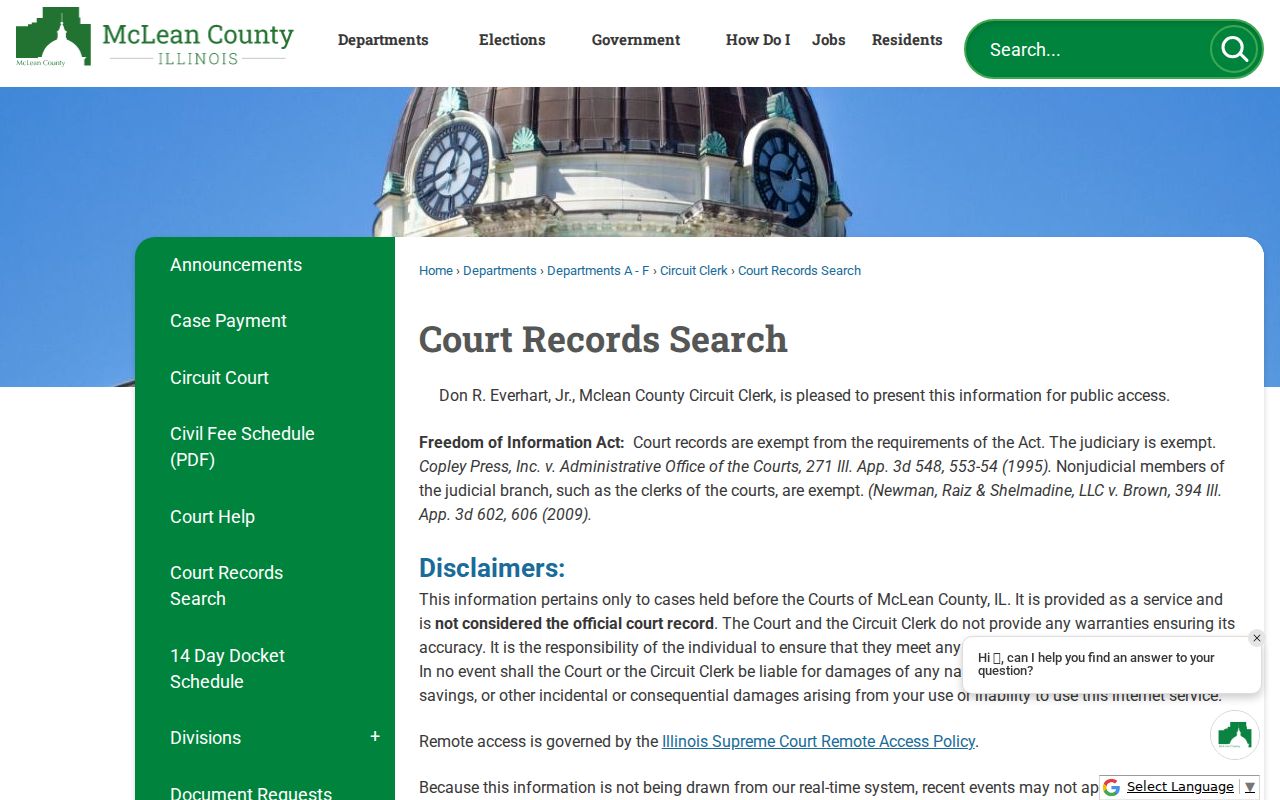
The image shows the official gateway, not a complete real-time case history.
Bloomington Vital Record Routes
Birth and death certificates are restricted in Illinois. The McLean County certificate office holds local birth and death records from 1999 to the present and lists eligibility, ID, and order methods. Genealogical access begins at 75 years for births and more than 20 years for deaths. Marriage certificates for McLean licenses reach from 1831 forward. Divorce files stay with the Circuit Clerk where granted.
County counter, mail, and online identity routes are documented. Statewide orders go through Illinois Public Health. A vital index can separate names, but a restricted certificate is not an open resident roll.
See McLean birth and death access.
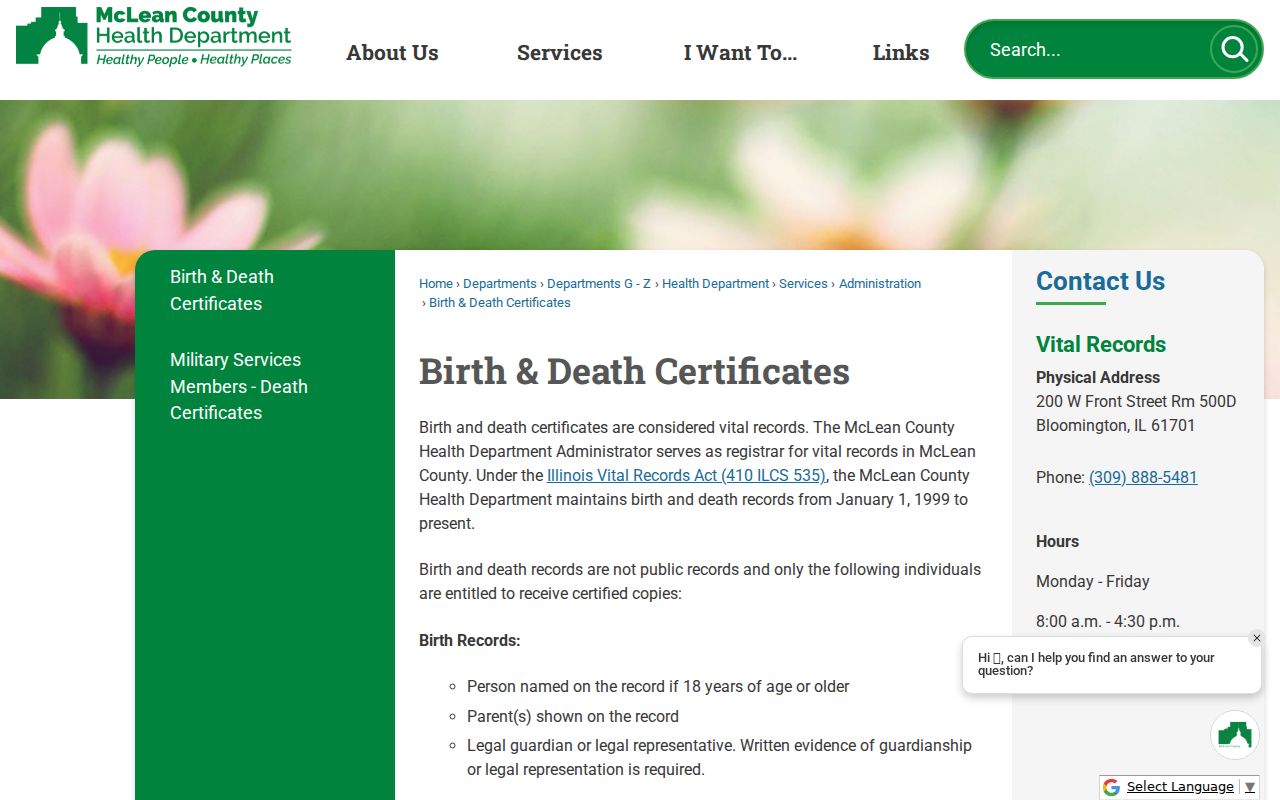
The county page marks the official route and should be checked for current eligibility and fees.
Bloomington Records Beyond Portals
When a city record is not posted, the Bloomington FOIA process accepts requests through JustFOIA, email, fax, mail, or in person at The Hub. Ask for an existing record and give a department, address, date range, permit, or case number. The city does not have to create a new directory from a broad question. Its stated response target is five business days, with a possible statutory extension.
Courts and vital certificates use separate rules. Route the request to the office that made the record.
View the McLean County gateway.
The county landing page helps select the correct custodian.
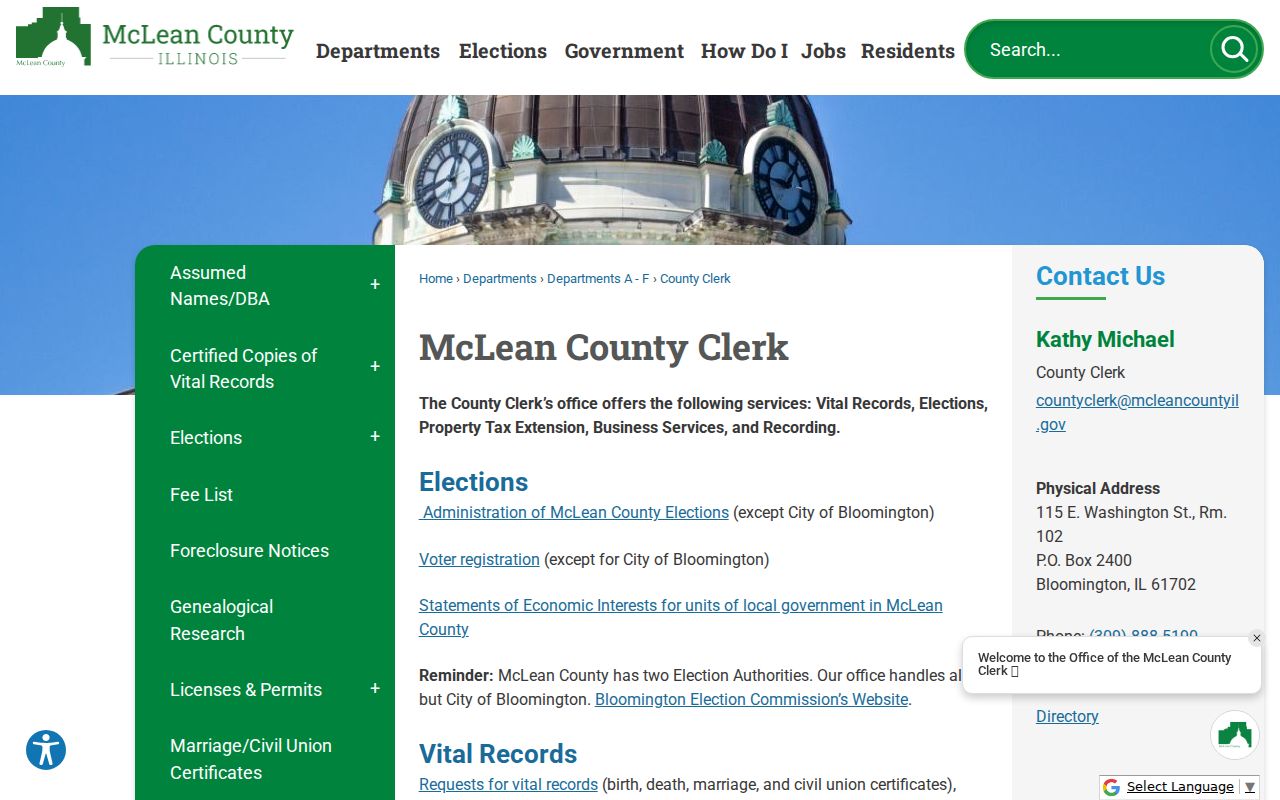
The Clerk source identifies the route for vital, marriage, and county election records.
Bloomington Directory Record Terms
Use the source's own label and date. That keeps a search result from becoming an unsupported current-address claim.
- Roll
- A list made for one official purpose, such as assessment or registration.
- Index
- A finding aid that points to a document.
- Parcel
- A mapped unit of land identified by a PIN.
- Criss-cross directory
- A directory arranged by address or phone rather than only by surname.
Lawful use. Use Bloomington resident records for lawful personal or civic research. Never use an address, roll, or index to stalk, threaten, harass, or harm anyone.
Bloomington Directory Geography
A Bloomington mailing line does not by itself prove that an address lies inside city limits. USPS ZIP codes describe delivery routes, while Census ZCTAs are statistical areas. Bloomington city intersects 61701, 61704, 61705, and 61761, yet the Bloomington sorting and delivery facility serves a broader group of ZIP codes. Ward, neighborhood, township, and parcel boundaries add still more layers.
Use the USPS address lookup for a delivery ZIP, Census data for statistical geography, and the city ward map for representation. The county property search can show a city field, but that label should still be tied to its source and retrieval date. The Bloomington ZIP code directory separates these boundary systems in detail.
A careful resident record should state “mailing city,” “city limit,” “ward,” or “ZCTA” rather than treating them as synonyms. That makes the Bloomington residents directory useful for family history, estate research, property questions, and civic work without overstating what one address label proves.
Historical Bloomington Resident Directories
The Bloomington Public Library Local History Collection keeps noncirculating directories, newspapers, maps, yearbooks, plat books, and an almost continuous Bloomington telephone-book run from 1965 to the present. The McLean County Museum of History and library digitized Bloomington and Normal directories from 1855 through 1920. A dated line may give a name, spouse or widow note, job, business, and house address.
The 1893 volume has resident, business, classified, and street-number sections. Search spelling variants in OCR, then inspect the scan. Full shelf detail belongs in the Bloomington city directory.
The State Archives records a June 19, 1900 fire that damaged some county material. When an early record is missing, try directories, newspapers, churches, cemeteries, and IRAD holdings before deciding it never existed. The library's Pantagraph files and obituary sources can place a name in a dated event. Evergreen Memorial Cemetery may add a burial date, section, lot, residence, birthplace, marker, obituary, and notes. Pairing a cemetery result with probate or a newspaper notice can separate people who share a name without claiming a current home.
McLean County was formed in 1830, and Bloomington became the county seat in 1831. That long office history does not mean every record series survives from the same year. Note whether the evidence came from an index, image, transcript, or certified copy.